

Managing money across countries can feel complicated at first.You might be living abroad, working with international clients, studying in another country, sending money to family overseas, or simply traveling frequently. International Banking Suddenly, everyday banking comes with new questions: Which account should you use? How do international transfers work? What exchange rate will you receive? Are there extra fees?
International banking brings many of these services together, making it easier to manage money when your financial life crosses borders.The good news is that you don’t have to understand every banking term before getting started. Once you know how international accounts, currency exchange, transfers, fees, cards, and security work, the process becomes much easier to navigate.
This guide explains the basics of international banking, what to look for in an international account, how cross-border transfers work, common costs to watch, and practical ways to manage money while living, working, or traveling internationally.
What Is International Banking?

International banking refers to banking services that help people and businesses manage money across national borders.
Depending on the bank and account, services may include holding or accessing money in different currencies, making international transfers, using cards abroad, receiving overseas payments, and managing finances while living outside your home country.
The exact services available vary by bank, country, account type, and customer eligibility.
For someone who regularly deals with more than one country, having suitable international banking services can make everyday financial tasks more convenient.
Who Might Need International Banking?
International banking can be useful for more than frequent travelers.
People with international financial needs may include:
- Expats living in another country
- International students
- Frequent travelers
- Remote workers
- Freelancers with overseas clients
- People sending money to family abroad
- Businesses working with international customers or suppliers
- People who own property in another country
- Individuals receiving overseas income
Your needs will depend heavily on how often you move money internationally and which currencies you use.
Common International Banking Services

Different financial institutions offer different combinations of services. Before opening an account, check exactly what is available in your country and for your situation.
| Service | What It Can Help With |
|---|---|
| International Transfers | Sending money to another country |
| Multi-Currency Accounts | Holding funds in supported currencies |
| Foreign Currency Exchange | Converting money between currencies |
| International Debit Cards | Making purchases or withdrawing cash abroad |
| Overseas Payments | Receiving money from another country |
| Online Banking | Managing accounts through digital platforms |
| Business Banking | Handling international business transactions |
| Foreign Currency Deposits | Holding certain currencies where supported |
How International Bank Accounts Work
An international bank account can provide access to banking services designed for customers with cross-border financial needs.
Some accounts may allow customers to hold multiple currencies, while others may primarily use one currency but support international transfers and overseas card usage.
Account features can differ considerably, so don’t assume that every account marketed as “international” works the same way.
Before opening an account, check:
- Supported currencies
- Countries where the service is available
- Transfer options
- Currency conversion methods
- Account fees
- ATM fees
- Minimum balance requirements
- Card availability
- Eligibility requirements
- Online and mobile banking features
Multi-Currency Banking Explained
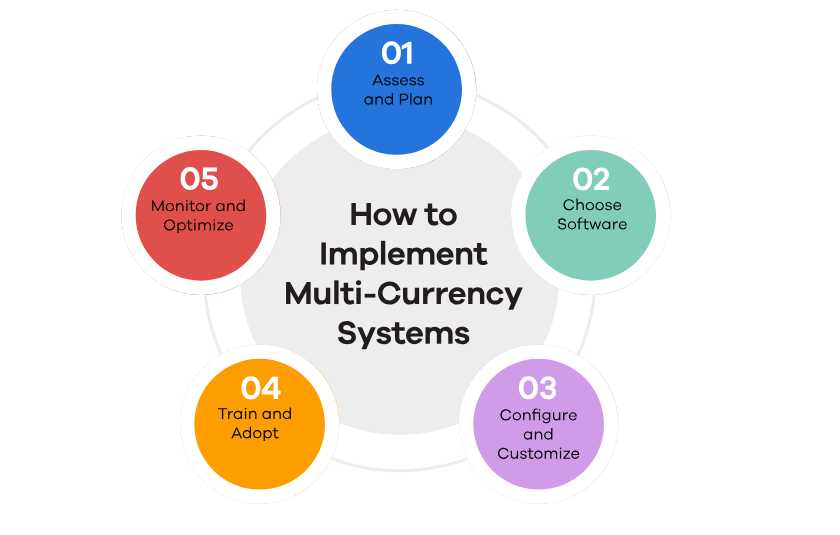
A multi-currency account allows customers to hold funds in more than one currency where the service supports it.
This can be useful for people who regularly receive or spend money in different currencies.
For example, someone who works with international clients may receive payments in one currency while paying expenses in another.
The main advantage is convenience, but you should still understand how currency conversion works and whether the account charges fees for holding, converting, sending, or receiving funds.
| Feature | What to Check |
|---|---|
| Supported Currencies | Which currencies can you hold? |
| Conversion | How are exchange rates determined? |
| Transfers | Which countries and currencies are supported? |
| Fees | Are there conversion or transaction charges? |
| Access | Can you manage currencies online or through an app? |
| Withdrawals | Can you access funds through an international card? |
How International Money Transfers Work
An international money transfer moves funds from one country to another.
The process can vary depending on the bank, destination, currency, transfer method, and regulations involved.
Generally, you provide information about the recipient and the receiving account, choose the amount and currency, and authorize the transfer.
The receiving bank or financial institution then processes the payment through the relevant payment network.
Before sending money, double-check the recipient’s details. A small mistake in an account number, routing information, or recipient name can cause delays or complications.
International Transfer Fees

One of the biggest things to check before sending money overseas is the total cost.
A transfer may involve more than one type of charge. Depending on the service, costs may include an upfront transfer fee, currency conversion cost, receiving fee, or intermediary banking charge.
| Potential Cost | What It Means |
|---|---|
| Transfer Fee | A charge for sending the payment |
| Currency Conversion Cost | Cost associated with exchanging currencies |
| Receiving Fee | A possible fee charged when money arrives |
| Intermediary Fee | A possible charge from another financial institution involved in processing |
| ATM Fee | Cost associated with certain cash withdrawals abroad |
The advertised transfer fee doesn’t always represent the entire cost. Check the exchange rate and any additional charges before confirming a transaction.
Understanding Exchange Rates
Exchange rates determine how much one currency is worth in another currency.
When you exchange money, the rate you receive can affect the final amount available to you.
For example, if you’re converting your home currency into the currency used where you live, even a small difference in the exchange rate can change the amount you receive.
When comparing international banking services, look beyond the headline transfer fee. Check how the provider handles currency conversion and whether there is an additional margin built into the exchange rate.
Banking While Traveling Abroad

Traveling internationally can make everyday banking slightly different from what you’re used to at home.
Before traveling, check whether your debit or credit card can be used internationally and understand any applicable foreign transaction or ATM fees.
It’s also useful to have access to your banking app so you can monitor transactions while away.
Travel Banking Checklist
- Check your card’s international usage options.
- Understand foreign transaction charges.
- Check overseas ATM fees.
- Keep your bank’s contact information accessible.
- Make sure you can access your banking app.
- Monitor account activity while traveling.
- Carry a suitable backup payment method.
International Banking for Expats
Moving to another country often means managing financial responsibilities in two places.
You may have income in one country, living expenses in another, and existing financial commitments back home.
An international banking setup can make these transactions easier to organize, but local banking requirements still matter.
Before moving, research the banking rules and account requirements in your destination country. You may need identification, proof of address, tax information, or other documentation depending on the institution and local regulations.
International Banking for Students

International students often have a different set of banking needs.
You may need an account for receiving funds, paying rent and everyday expenses, withdrawing cash, or receiving money from family.
When comparing options, focus on practical costs and accessibility rather than choosing an account simply because it has a long list of features.
| Student Banking Need | What to Look For |
|---|---|
| Everyday spending | Convenient card access |
| Receiving money | Supported transfer methods |
| Cash withdrawals | Reasonable ATM access and fees |
| Currency exchange | Clear conversion terms |
| Online access | Reliable mobile or online banking |
| Account requirements | Suitable eligibility and documentation |
International Banking for Freelancers and Remote Workers
Freelancers and remote workers may receive payments from clients in different countries.
If your income regularly arrives in foreign currencies, consider how easily you can receive, convert, hold, and withdraw those funds.
Keep clear records of payments and understand the tax and reporting requirements that apply to you.
An account that works well for one freelancer may not be suitable for another, particularly when currencies, countries, payment volumes, and business structures differ.
International Banking for Businesses

Businesses that operate across borders may need banking services for receiving customer payments, paying suppliers, managing currencies, and handling international expenses.
Business banking requirements can be more complex than personal banking, particularly when transactions involve several countries.
| Business Need | Banking Feature to Consider |
|---|---|
| Overseas customer payments | International receiving options |
| Supplier payments | Cross-border transfers |
| Multiple currencies | Multi-currency capabilities |
| Employee expenses | Business cards and payment tools |
| Financial monitoring | Online business banking |
| Currency management | Foreign exchange services |
Businesses should also consider applicable regulations, reporting requirements, and transaction limits.
International Debit and Credit Cards
Cards can make spending abroad much easier, but the costs can vary.
Before using a card internationally, check whether your provider charges foreign transaction fees, overseas ATM fees, currency conversion costs, or other charges.
You should also know how to report a lost or stolen card while abroad.
Keeping your banking app updated and monitoring transactions can help you spot unfamiliar activity quickly.
How to Keep International Banking Secure

Cross-border banking requires the same basic security habits as domestic banking, with a little extra attention when you’re traveling.
Use strong, unique login credentials and enable additional security features offered by your financial institution.
Avoid entering banking information on suspicious websites or using unsecured public connections for sensitive transactions.
Simple Banking Security Habits
- Use strong and unique passwords.
- Enable multi-factor authentication when available.
- Keep banking apps and devices updated.
- Review account activity regularly.
- Be careful with unexpected messages or payment requests.
- Don’t share passwords or security codes.
- Contact your bank through official channels if something looks suspicious.
Documents You May Need

Requirements vary by country and financial institution, but international customers may be asked for additional documentation.
Potential requirements can include:
- Government-issued identification
- Proof of address
- Tax information
- Visa or residency documentation
- Employment or income information
- Business documentation for business accounts
Always check the current requirements directly with the institution before starting an application.
How to Compare International Banking Options
Choosing an international banking service is less about finding one account that works for everyone and more about finding features that match your situation.
Create a simple comparison before opening an account.
| Feature | Questions to Ask |
|---|---|
| Account availability | Is it available in your country? |
| Currencies | Which currencies are supported? |
| Transfers | Where can you send and receive money? |
| Exchange rates | How is currency conversion handled? |
| Fees | What are the total transaction and account costs? |
| ATM access | Can you withdraw money abroad? |
| Cards | What international card options are available? |
| Digital banking | Can you manage everything online? |
| Security | What account protection features are provided? |
| Support | How can you contact customer service from abroad? |
Common International Banking Mistakes

International banking becomes much easier when you know what to watch out for.
Some common mistakes include:
- Looking only at the advertised transfer fee
- Ignoring currency conversion costs
- Forgetting to check overseas ATM charges
- Sending money without checking recipient details
- Choosing an account without checking supported currencies
- Ignoring local banking requirements
- Failing to monitor transactions while abroad
- Assuming every international account offers the same services
Taking a few minutes to read the account terms can prevent unpleasant surprises later.
Tips for Managing Money Across Borders
If you regularly deal with multiple currencies, organization can make a noticeable difference.
Keep track of which accounts you use, which currencies you hold, and where recurring payments are coming from or going.
It can also help to separate everyday spending from money you are holding for larger international expenses.
A simple system might include:
- One account for everyday expenses
- A separate place for international income where appropriate
- A clear record of transfers
- Regular checks of exchange rates
- Secure access to your banking apps
- A backup payment method when traveling
Is International Banking Right for You?

International banking can be useful when your financial life regularly crosses borders.
If you travel occasionally, a standard account with suitable international card and transfer features may be enough. Someone living abroad, receiving foreign income, or regularly moving money between countries may have different requirements.
The important thing is to start with your actual needs rather than choosing an account based only on its name or marketing.
FAQ’S
1. What is international banking?
It helps people and businesses manage money across different countries.
2. Who needs international banking?
Expats, travelers, students, freelancers, businesses, and people sending money abroad may find it useful.
3. What is a multi-currency account?
It allows you to hold and manage money in multiple supported currencies.
4. How do international transfers work?
Money is sent from an account in one country to an account in another, often with currency conversion.
5. What fees can apply?
Transfer fees, currency conversion costs, ATM charges, and intermediary fees may apply.